Food
Tafarnout, amlou and mint tea
What you eat at the fantasia dinner and where it comes from: Souss bread from the clay oven, amlou made with argan oil, couscous, and the ritual of mint tea.
Reserve the fantasia evening ↗The welcome table
The fantasia evening starts with food before it starts with music. Guests are welcomed with milk and dates, in keeping with Moroccan tradition, and before taking a seat they find Tafarnout bread fresh from a wood fire, with bowls of amlou, honey and olive oil for dipping. It is the most local part of the whole evening: bread, oil and almond paste are everyday tastes of the Souss, the region around Agadir. Take your time here, because the dinner that follows is generous.
Tafarnout, the bread of the Souss
Tafarnout is a bread from the Souss, named after the clay oven it is baked in. Locally it is eaten with tajines, or with an assortment called timkiline that brings together argan oil, amlou and olive oil for dipping. Bread is a staple of every Moroccan meal, and Moroccans traditionally eat with their hands, using bread to scoop. At the fantasia welcome the bread is baked over a wood fire, so if you see flames near the entrance, that is where yours comes from. Tear it, dip it in the oil first, then the amlou, and go easy: dinner is still to come.
Amlou and the argan tree
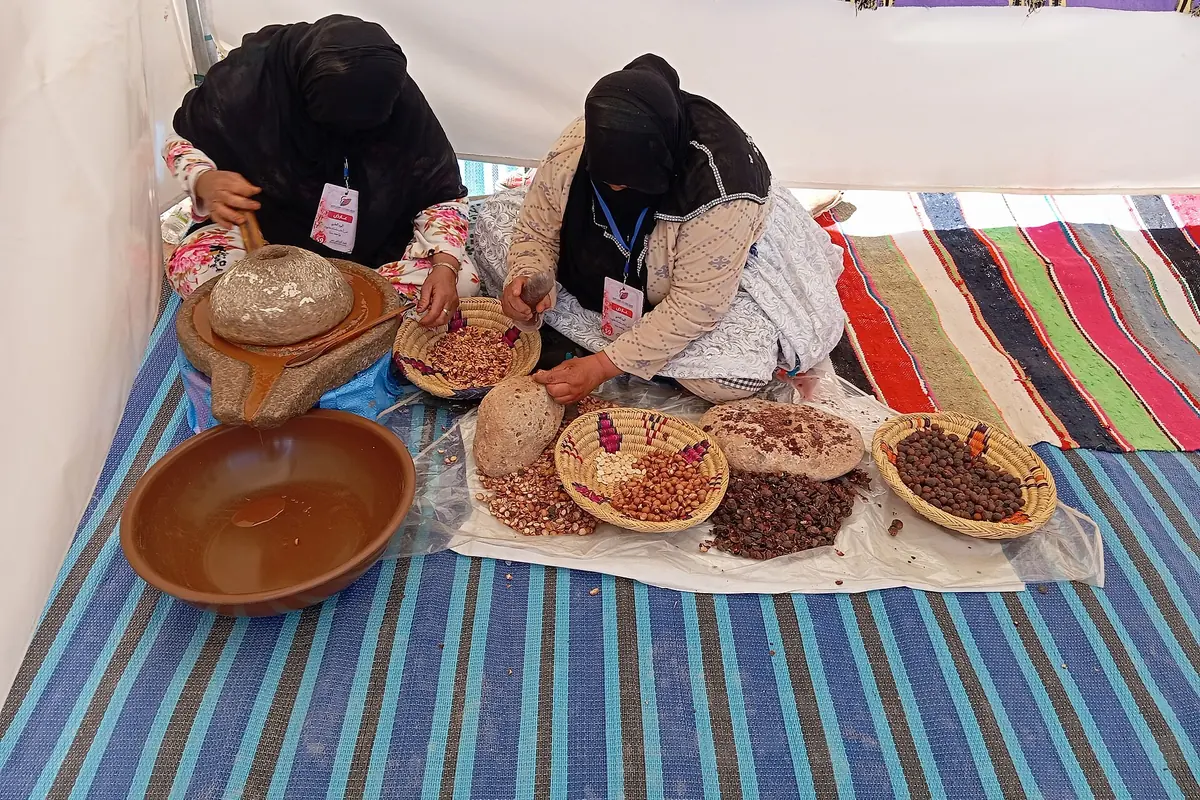
Amlou is a spread of toasted almonds crushed and kneaded with honey and argan oil, usually eaten at breakfast or with afternoon tea. Its key ingredient comes from the argan, a thorny tree that now grows only in south-western Morocco and has become the symbol of the Souss. Its woodlands form a UNESCO biosphere reserve, and in 2014 UNESCO also listed the know-how around the tree, from harvesting the fruit to milling the oil, work done mainly by rural women. Much of the oil is still produced by women's co-operatives, and the hardest step is cracking the hard nut by hand between two stones.
Couscous under the tents
Dinner is a set Moroccan meal served under large tents, and couscous is its centrepiece. In 2020 UNESCO inscribed the knowledge and practices of couscous for four Maghreb countries, Morocco among them, describing semolina rolled by hand, steamed and cooked, then served with vegetables and meat that change with the region and the season. The Souss has a long claim to the dish: archaeologists have found twelfth-century couscous pots at Igiliz, a ruined site in the Sous valley.
The vegetarian menu
Vegetarians are catered for, but only by arrangement: the vegetarian menu has to be chosen when you book, not requested at the table. It replaces the meat dishes and keeps the same dessert and mint tea. If you have other dietary needs, message the organiser through GetYourGuide after booking and ask well before the night, since a set dinner for a large audience is prepared in advance.
Mint tea, the closing ritual
Dinner ends with mint tea and Moroccan pastries. Mint tea, called atay, is Morocco's most popular drink, and making it well is treated as an art. The pouring matters as much as the tea: Moroccan pots have long, curved spouts so the tea can be poured into small glasses from a height, which raises the bubbles Moroccans like. It traditionally comes with sugar, so expect it sweet.
Drinks are extra
Everything above is in the price of the ticket; other drinks are not. Mint tea comes with dinner, and anything else you want to drink is ordered à la carte and paid for at the venue. Over a four-hour evening that adds up, so keep it in your budget, and if you plan to drive yourself, remember that the return shuttle is included and lets everyone in your group enjoy the night.
Sources