Music
Gnawa, rwayess and dekka music
The music that comes to the tables at the fantasia dinner: what Gnawa, rwayess and Dekka Marrakchia are, the instruments to look for, and how to join in.
Reserve the fantasia evening ↗Three traditions, one dinner
The troupes that move between the tables at the fantasia dinner come from very different corners of Moroccan music. Gnawa is a spiritual music with roots in West Africa. The rwayess are the poet-singers of the Amazigh Souss, the region around Agadir. Dekka Marrakchia is a percussion tradition from Marrakech. Hearing them in one evening is a quick tour of the country's sound, and knowing a little about each makes the table-side sets far more rewarding. Here is what to listen and look for.
Gnawa: castanets and the guembri
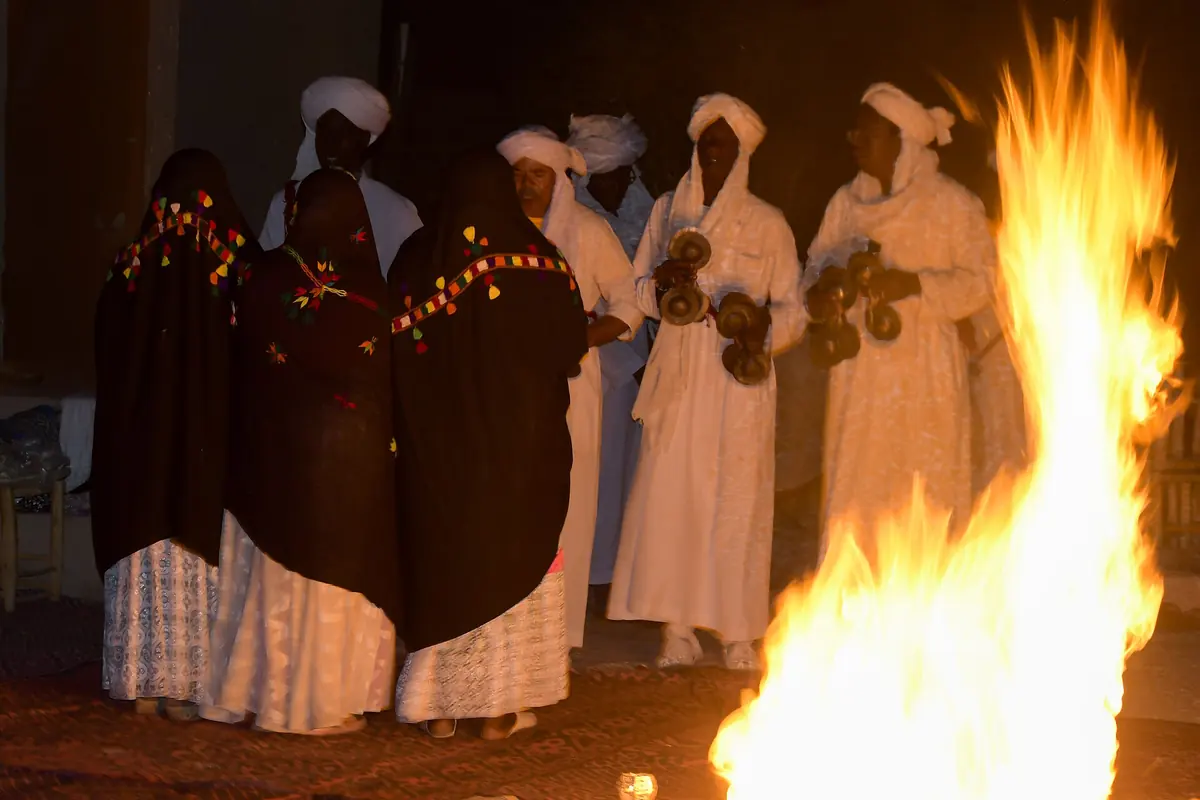
Gnawa music grew from the songs and rituals of West Africans brought to Morocco, and UNESCO, which listed it in 2019, describes it as Sufi brotherhood music that mixes the sacred and the secular. Two instruments define it: the qraqeb, large iron castanets clacked in fast, interlocking rhythms, and the guembri, a three-string lute whose deep, buzzing bass leads the music. Songs repeat a line or two over and over, which is what gives Gnawa its hypnotic pull. UNESCO adds that city troupes wear colourful embroidered costumes, while rural groups favour white.
From healing nights to festival stages
At its heart Gnawa is ceremonial. Its all-night rituals, called lila, are led by a master musician, the maâlem, and are meant to heal and to bind a community together. Over recent decades the music has also moved onto public stages, most famously at the Gnaoua World Music Festival in Essaouira, held each June since 1998, where Gnawa masters play alongside jazz, blues and reggae musicians. What you hear at a dinner show belongs to that public side of the tradition.
Rwayess: the poet-singers of the Souss
The rwayess, also written rrways, are the musicians of the Shilha, the Amazigh people of the Souss and the High Atlas. A group is led by a raiss, a singer and poet. A performance traditionally opens with the astara, an instrumental passage on the rebab or the lutar that sets the melody, followed by tambourine and flute; then come sung poetry, dance and a final section that speeds up and stops abruptly. Agadir, often called the capital of Amazigh culture, is home ground for this music.
Dekka Marrakchia: the drummers
Dekka Marrakchia takes its name from the Arabic for striking, and it is all percussion and voice. Players stand in a circle and sing while beating small clay drums, a large frame drum and pairs of metal cymbals, with a leader steering the group from a slow rhythm into a fast one. In Marrakech it belongs to the festival of Ashura, and a related form is played in Taroudant, in the Souss. When the tempo jumps, that is your cue to clap along.
Ahwach, the dance of the villages
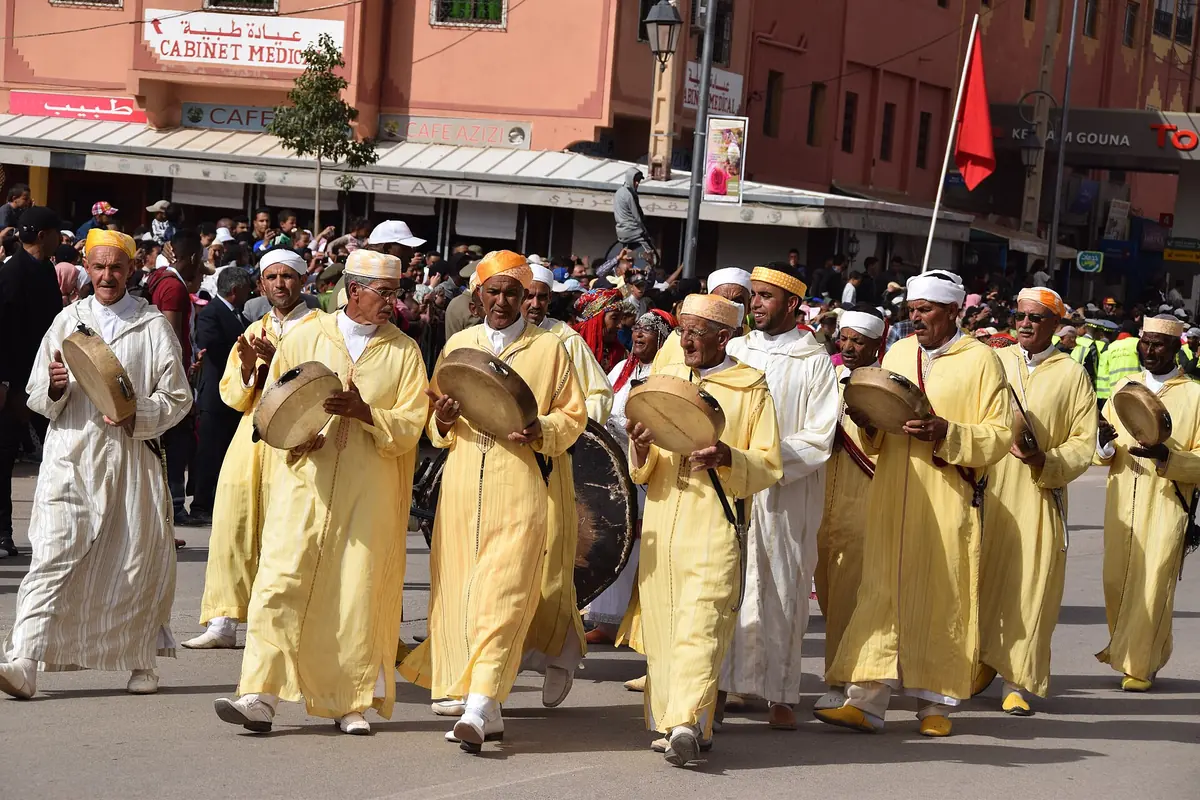
Ahwach is not named on the ticket, but it is the Souss's own collective art, and you may meet it at festivals in the region. Two lines of performers, often men facing women, trade sung poetry, dance and frame-drum rhythms. Wikipedia notes that it is rarely performed outside individual villages, because a full troupe can run to dozens of people. Any short version staged for visitors is a small slice of something much bigger.
How to join in
Clap on the beat, smile, and let the musicians lead. If a player beckons you up to dance, a few steps in the circle are all anyone expects, and saying no with a smile is fine too. Musicians at the tables are working, so keep phones out of their faces and film from your seat. Applaud each troupe as it moves on to the next table; another will not be far behind.
Sources